
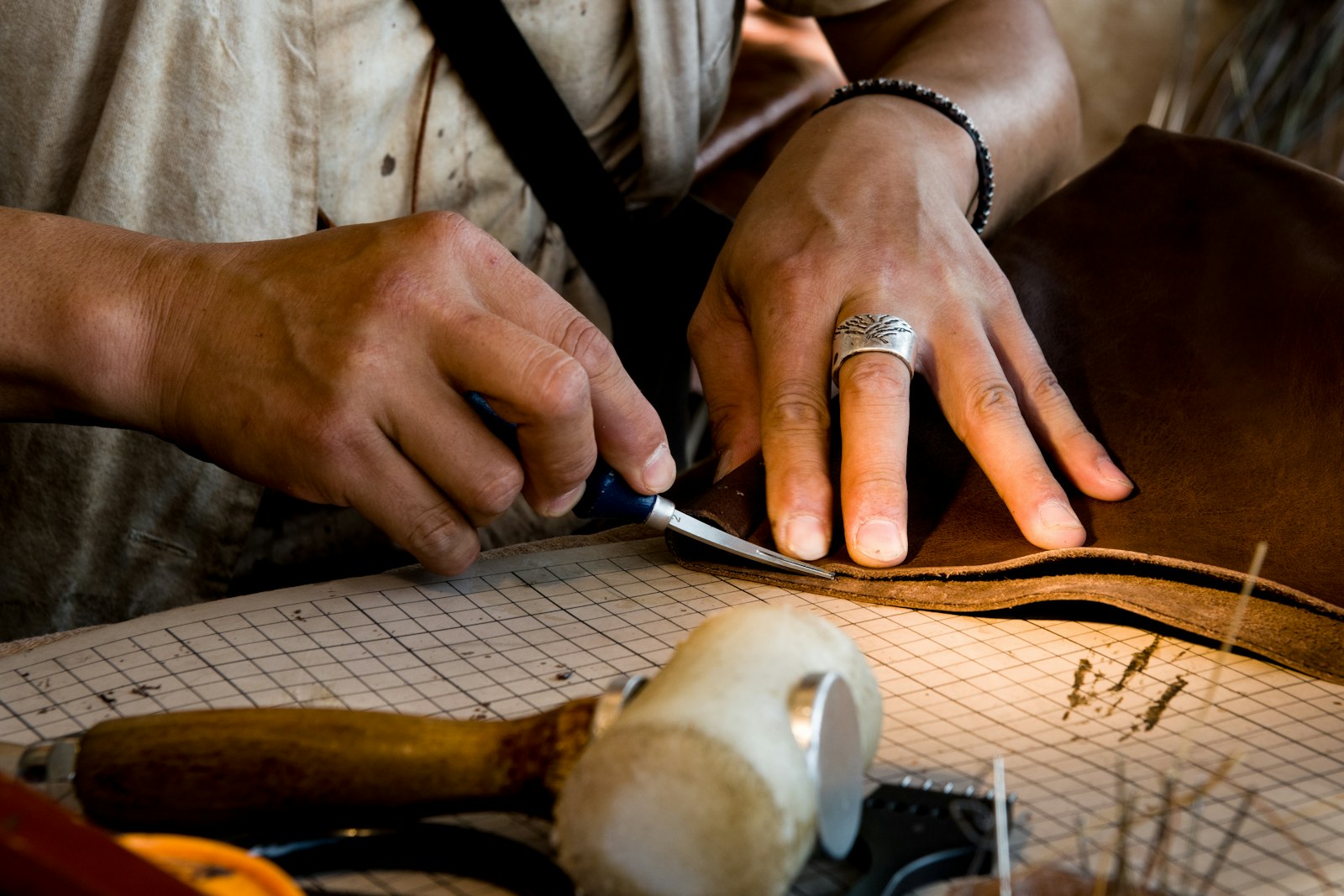
Start with the hide
A hide is not even. The leather from the back is tight and firm; the belly is looser and stretches. We cut bag bodies and shoe uppers from the back and the shoulders, and keep the softer parts for linings and small pieces.
Look, then bend
Good leather has an even grain with small natural marks: a healed scratch, a vein. Heavy plastic coating hides the grain and cracks when it bends. Fold a corner over: full-grain leather wrinkles finely and springs back.
Smell and edges
Veg-tanned leather smells of bark and wood; chrome-tanned leather is softer and holds bright colour better. Both have their place. Look at a cut edge too: a dense, firm edge burnishes smooth, a loose one frays.
Finished to be used
We paint or burnish every edge, and set stitches with a punch and waxed thread so a single broken stitch does not run. Then the leather goes out to be carried, and it starts to take on its owner's shape.